Success Story under ICAR-IIPR NER Sub-Plan
Scientific Cultivation of Rajma Enhances Productivity and Market Access in South Tripura
Rajma is an important rabi pulse crop cultivated by local farmers in the plain regions of South Tripura. However, productivity remained low due to the continued cultivation of the local variety, poor crop management practices, and limited access to quality inputs and organized markets.
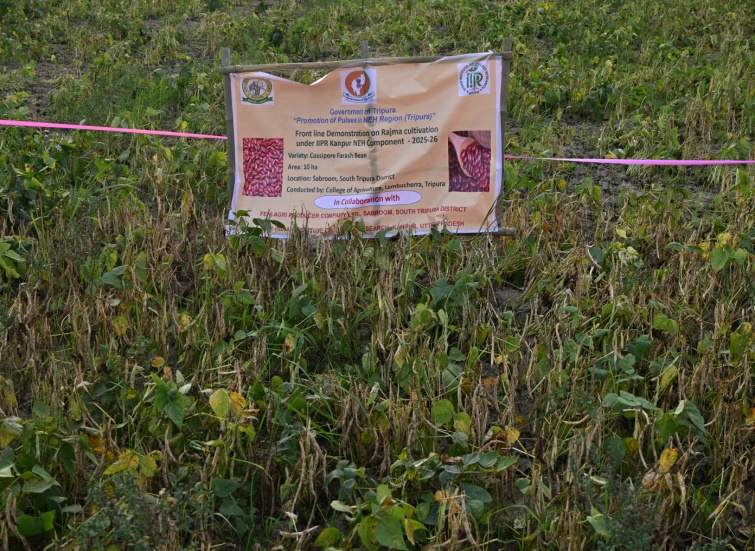
To address these constraints, the College of Agriculture, Tripura implemented a Demonstration on Scientific Cultivation of Rajma during the Rabi season 2025–26 under the ICAR–Indian Institute of Pulses Research (ICAR-IIPR) collaborative programme “Promotion of Pulses in NEH Region (Tripura).” The demonstration covered 25 ha in South Tripura district involving farmers of Doulbari and Indira Nagar villages.
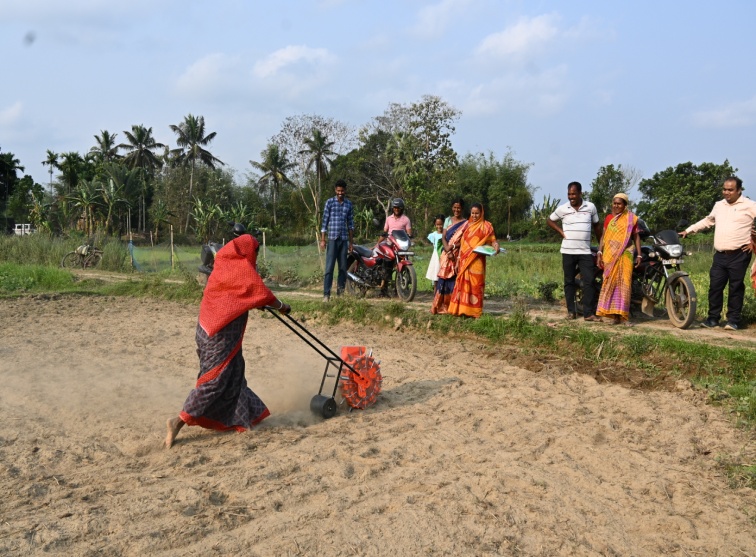
Under the programme, the improved rajma variety Kashipur Farash Bean was introduced in 12 ha (50% of the demonstration area), replacing the traditionally grown local variety. Farmers were supplied with quality seed, fertilizers, Trichoderma-based bio-pesticide, micronutrients, plant protection chemicals, manual seed drills, and manual ridgers. Two capacity-building programmes on Good Agricultural Practices (GAP) in rajma cultivation were organized, followed by field demonstrations on line sowing, seed treatment with Trichoderma, ridge making, and micronutrient application.
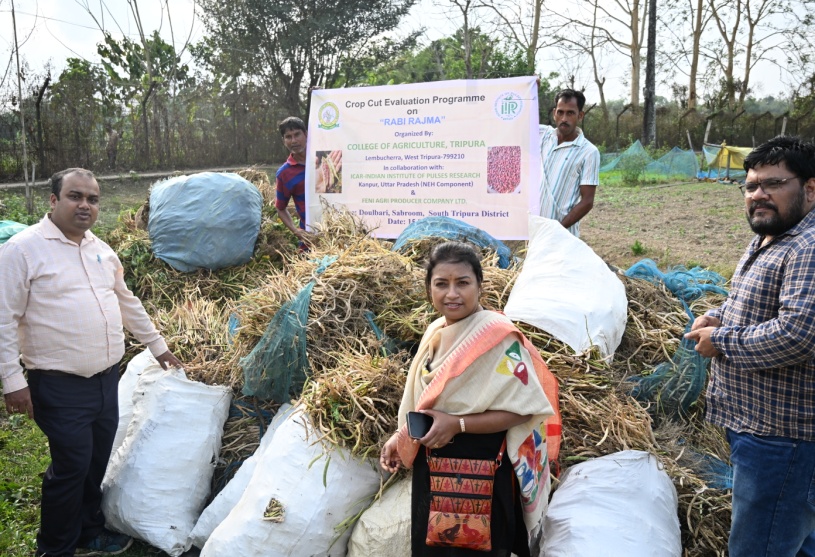
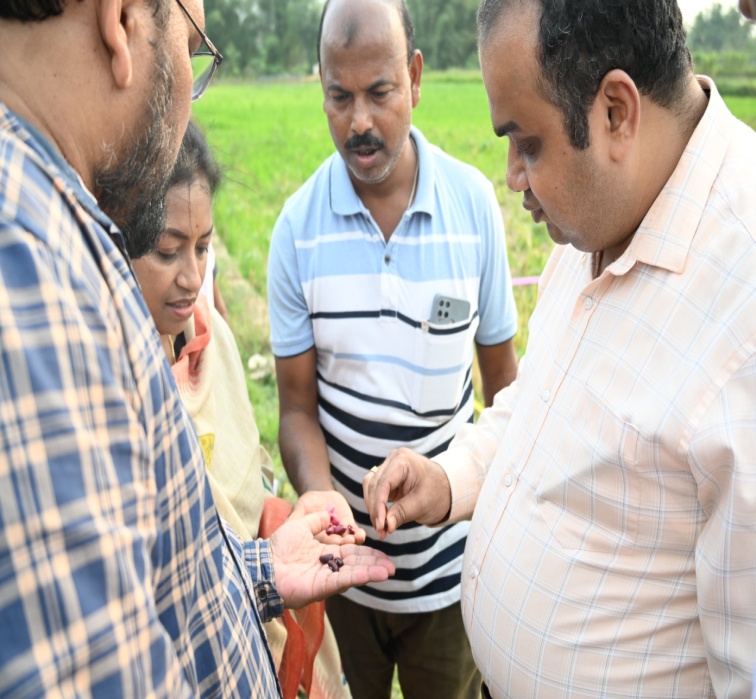
A Crop Cut Evaluation conducted on 15 March 2026 demonstrated the superiority of the improved production technology. The Kashipur Farash Bean variety recorded 12–15% higher yield than the local variety, with an average productivity of 1.8–2.0 t/ha. Besides higher yield, the improved variety produced more pods per plant, larger seed size, and better grain quality, making it more acceptable in the market.
A major achievement of the programme was the establishment of a direct market linkage between the participating farmers and a buyers’ organization in Raipur, Chhattisgarh. Owing to the superior seed size, attractive colour, and better grain quality, the harvested produce fetched a premium price. The entire produce was successfully transported by rail to Raipur, eliminating the role of intermediaries and improving farmers’ profitability. Economic analysis indicated that farmers adopting the scientific production technology realized a benefit–cost (B:C) ratio of 1.8–2.0:1, demonstrating the economic viability of the intervention.
The demonstration showed that the adoption of improved varieties coupled with scientific crop management and market linkage can significantly enhance rajma productivity, quality, and farmers’ income in the North Eastern Hill Region. The success has generated considerable interest among neighbouring farmers, creating opportunities for wider horizontal spread of improved rajma cultivation in Tripura.
SUCCESS STORIES UNDER IIPR-NER PROGRAMME
Success-story mirrors the fruitfulness of an initiative. The institute, through its IIPR-NER Sub-Plan, has been abled to count few cases which have brought a difference in an individual’s life-standard. Below are the few success-stories from north-east region of India, achieved under the programme.
Transforming Non-Cropped Land into Productive Organic Farming – The Journey of Mrs. E. Tasing
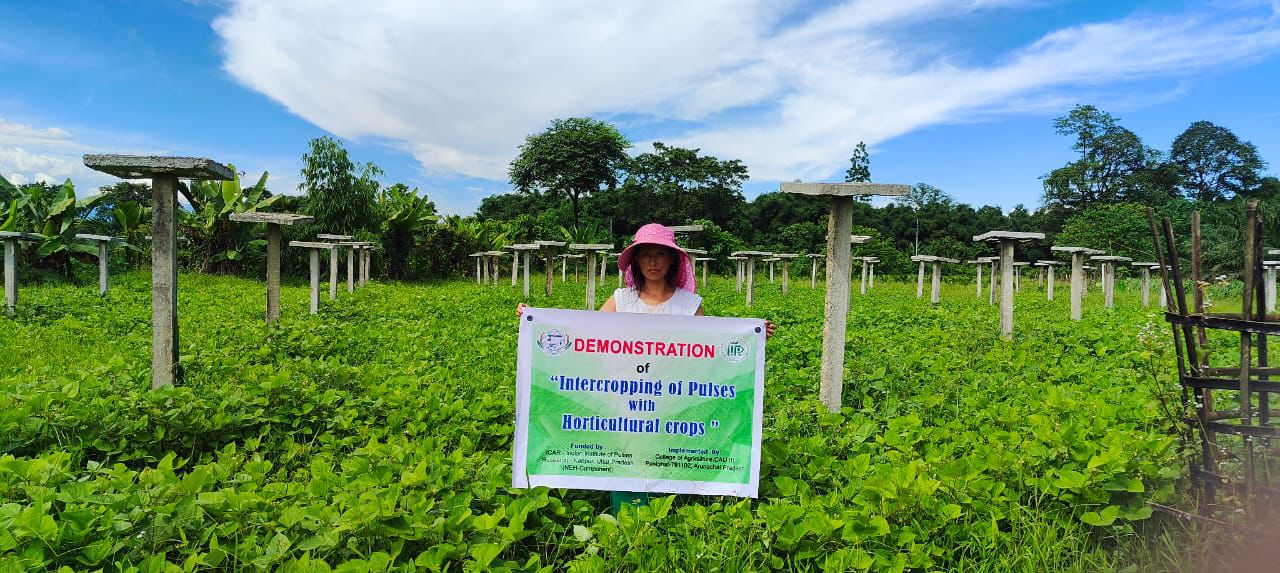
Mrs. E Tasing, a 32-year-old progressive farmer from Oyan village in East Siang district, Arunachal Pradesh, has set a remarkable example by converting one hectare of non-cropped land into a thriving organic farming system. With only a 12th pass qualification, her dedication and openness to innovation led her to adopt the interventions introduced under the project “Promotion of Pulses in NE Region” under IIPR-NER Component. In 2024–25, she implemented an intercropping system of high-yielding variety of greengram (SBC-40) with dragon fruit on her land, which was previously uncultivated. Utilizing Integrated Pest Management (IPM) and Integrated Disease Management (IDM) technologies, including Rhizobium and Trichoderma, she achieved a yield of 12 quintals per hectare from greengram in the very first year, with dragon fruit plants in their pre-bearing stage. This conversion not only brought barren land under cultivation but also demonstrated the viability of sustainable and integrated farming practices. Her venture resulted in a cost-benefit ratio of 1:2.50, indicating significant economic returns. Mrs. Tasing’s success serves as an inspiring model for women and smallholder farmers across the region, proving that with the right support and innovation, organic pulse cultivation can thrive even in non-traditional areas.
Empowering Rural Women through Pulse-Based Enterprises – The Journey of Mirbuk Ane SHGs, Pasighat
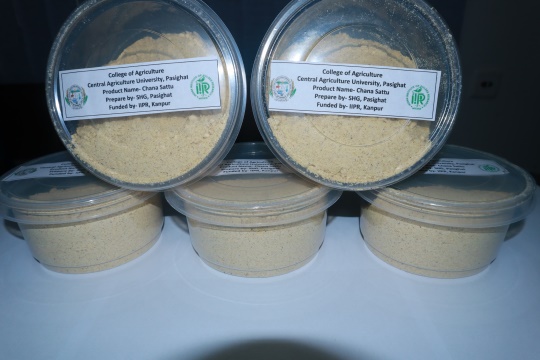
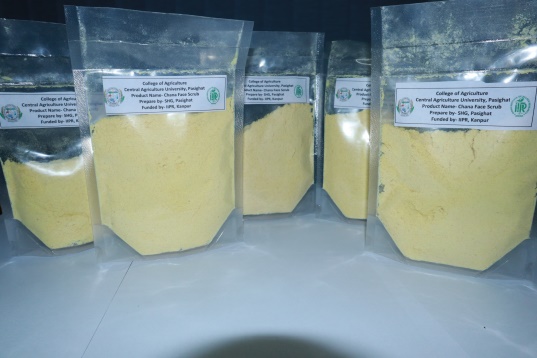
The Mirbuk Ane Self Help Groups (SHGs) from Pasighat, Arunachal Pradesh, have emerged as a powerful example of women-led value addition and rural entrepreneurship under the “Promotion of Pulses in NEH Region” initiative. Leveraging locally available pulses such as blackgram and greengram, the SHG members have been trained and empowered to produce a variety of value-added food products, including bhujia, besan, and cookies. These products, processed and packaged with quality and hygiene standards, have not only gained popularity in local markets but also created a sustainable source of income for the women involved. Through collective effort, skill development, and market-oriented processing, the SHGs have transformed traditional farming into a profitable enterprise. The economic impact has been substantial, with the group achieving an impressive cost-benefit ratio of 1:3.50, showcasing the profitability of agro-based micro-enterprises when supported by capacity building and value-chain integration. This initiative has not only improved livelihoods but also enhanced the confidence and social standing of women farmers, reinforcing the role of SHGs as engines of economic empowerment in the region.
With timely input support of quality seeds, fertilizers, plant protection chemicals under IIPR NER Programme, farmers from Unakoti, South Tripura, West Tripura, Khowai and Sepahijala districts of Tripura have proved their progressiveness in scientific farming of Blackgram, Rajma and Lentil, which have been detailed below.
Success details of Mr. Kunjababu Sinha
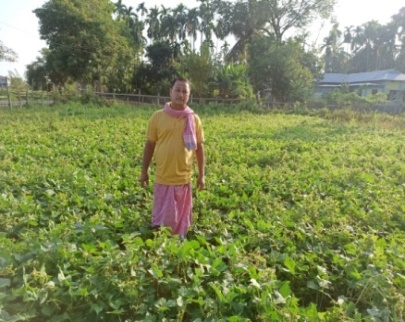
| District | Unakoti |
| Name of GP | Bilaspur |
| Name of Programme | Promotion of pulse in NEH Region(Tripura) under IIPR-NER Programme |
| Implementing office | College of Agriculture Tripura |
| Name of Crop and Variety | Black Gram (Var-IPU 10-26) |
| Area Covered | 0.16 ha |
| Production Cost (Rs.) | 7,675/- |
| Benefits from Scheme | Seed, Bio-Fertilizer (Rhizobium), Bio-Pesticide (Trichoderma), Fungicide, Insecticide, Herbicide, Micro-nutrient formulation, Seed Drill |
| Production | 135 kg/0.16 ha |
| Productivity | 8.44q/ha |
| Actual Income(Rs.) | 16200/- |
| Net Profit (Rs.) | 8,525/- |
| Farmer’s View | HYV seeds, reduction in cultivation cost, less disease & pests, Difficulties in Post-harvest processing & storage |
Success details of Mr. Rajen Das
| District | South Tripura |
| Name of GP | Doulbari |
| Name of Programme | Promotion of pulse in NEH Region(Tripura) under IIPR-NER Programme |
| Implementing office | College of Agriculture Tripura |
| Name of Crop and Variety | Rajma (Var-Hur 301) |
| Area Covered | 0.8 ha |
| Production Cost (Rs.) | 60,000/- |
| Benefits from Scheme | HYV Seed, Bio-Fertilizer (Rhizobium), Bio-Pesticide (Trichoderma), Micro-nutrient formulation |
| Production | 1500 kg/0.8 ha |
| Productivity | 18.75 q/ha |
| Actual Income (Rs.) | 1,35,000/- |
| Net Profit (Rs.) | 75,000/- |
| Farmer’s View | HYV seeds, reduction in cultivation cost, less disease attack |
Success details of Mr. Ratna Debnath
| District | South Tripura |
| Name of GP | Doul bari |
| Name of Programme | Promotion of pulse in NEH Region(Tripura) under IIPR-NER Programme |
| Implementing office | College of Agriculture Tripura |
| Name of Crop and Variety | Rajma (Var-Tripura Rajma Sel-1) |
| Area Covered | 0.64 ha |
| Production Cost | Rs.40,000/- |
| Benefits from Scheme | Seed, Bio-pesticide (Trichoderma), Fungicide, Insecticide, Micronutrients formulation |
| Production | 1080 kg/0.64 ha |
| Productivity | 16.8 q/ha |
| Actual Income | Rs.97,200/- |
| Net Profit (Rs.) | 57,200/- |
| Farmer’s View | HYV seeds, reduction in cultivation cost, less disease & pest attack |
Success details of Mr. Kshitish Das
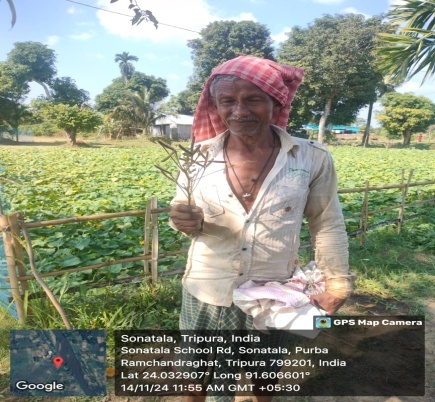
| District & Area | Khowai |
| Name of GP | North Ramchandra Ghat |
| Name of Programme | Promotion of pulse in NEH Region(Tripura) under IIPR-NER Programme |
| Implementing office | College of Agriculture Tripura |
| Name of Crop and Variety | Black Gram [var-IPU10-26] |
| Area Covered (Rs.) | 0.16 ha |
| Production Cost (Rs.) | 8155.00 |
| Benefits from Scheme | Seed, Fertilizers like Urea, SSP & MOP, bio-fertilizer (Rhizobium), Bio-pesticide (Trichoderma), Micronutrients formulation |
| Production | 200 kg/0.16 ha |
| Productivity | 12.5q/ha |
| Actual Income(Rs.) | 18000/- |
| Net Profit (Rs.) | 9856/- |
| Farmer’s View | HYV seeds, reduction in cultivation cost, less disease & pest attack, difficulties in Post-harvest processing & storage |
Success details of Mr. Abu bakkar Siddique
| District | Sepahijala |
| Name of GP | Raghunathpur |
| Name of Programme | Promotion of pulse in NEH Region(Tripura) under IIPR-NER Programme |
| Implementing office | College of Agriculture Tripura |
| Name of Crop and Variety | Lentil (var- L-4717) |
| Area Covered | 1.0 ha |
| Production Cost (Rs.) | 35,000/- |
| Benefits from Scheme | Seed, Fertilizers like Urea, SSP & MOP, Bio-fertilizer (Rhizobium), Bio-pesticide (Trichoderma), Fungicide, Insecticide, Herbicide, Micronutrients formulation, Winnower |
| Production | 775 kg/ha |
| Productivity | 7.75 q/ha |
| Actual Income (Rs.) | 75,000/- |
| Net Profit (Rs.) | 40,000/- |
| Farmer’s View | HYV seeds, Suitability in rice fallows, reduction in production cost, difficulties in Post-harvest processing & storage |
Success details of Mr. Sripad Debnath
| District & Area | West Tripura |
| Name of GP | Nutannagar |
| Name of Programme | Promotion of pulse in NEH Region(Tripura) under IIPR-NER Programme |
| Implementing office | College of Agriculture Tripura |
| Name of Crop and Variety | Rajma [Var-HUR 301] |
| Area Covered | 0.16 ha |
| Production Cost (Rs.) | Rs.9,000/- |
| Benefits from Scheme | Seed, Fertilizers like Urea, SSP & MOP, Bio-fertilizer (Rhizobium), Bio-pesticide (Trichoderma), Fungicide, Insecticide, Herbicide, Micronutrients formulation, Winnower |
| Production | 280 Kg / 0.16 ha |
| Productivity | 17.50 q/ha |
| Actual Income (Rs.) | 28,000/- |
| Net Profit (Rs.) | 18,000/- |
| Farmer’s View | HYV seeds, high demand in local Agartala Market, reduction in cultivation cost |
One-day training, input distribution and crop cutting programmes conducted on Rabi Rajma & Lentil in South Tripura District under IIPR NER Sub-plan
One-day Farmers’ Training-cum-Input Distribution Programmes on “Good Agricultural Practices of Summer Black Gram and Green Gram” were successfully conducted at Doulbari, Sabroom (15 March 2026) and Haripur, Hrsishyamukh (18 March 2026) of South Tripura district. Approximately 100 farmers actively participated in the programme. The initiative aims to bring about cultivation of summer pulses in around 8 ha in Sabroom and 30 ha in Hrishyamukh sub-division.
During the programmes, farmers were provided with quality inputs including seeds of Black Gram (IPU 13-1 & IPU 11-02) and Green Gram (IPM 410-3), along with manual seed drills, Trichoderma, PSB, KMB, Rhizobium, micronutrients, manual ridgers, hermetic storage bags, and fertilizers. Field-level demonstrations on seed treatment using Trichoderma viride and line sowing of pulses using a manual seed drill were also conducted, enabling farmers to gain practical knowledge of improved cultivation practices.
Following the training, the project team led by Dr. Abhijit Saha visited Rajma and Lentil fields in South Tripura, covering intervention areas of 25 ha (Rajma) and 35 ha (Lentil). Scientific crop cut evaluations were conducted in both local and improved variety plots. The results indicated an estimated yield increase of 12–15% in improved varieties. Farmers observed better pod number and seed size in improved varieties such as Kashipur Farash Bean (Rajma) and L-4717 (Lentil). At present, Rajma crops are nearing maturity and are expected to be harvested within 10–12 days, while Lentil harvesting is already in progress.
The programme received positive feedback from farmers, who expressed satisfaction with the technical support, input supply, and demonstrated benefits of improved agricultural practices.


Eight-day Training Programme on
Recent Advances in Pulse Production Technologies for Strengthening Food and Nutritional Security among Smallholder Farmers in North East India
An eight-day intensive training programme exclusively for farmers on “Recent Advances in Pulse Production Technologies for Strengthening Food and Nutritional Security among Smallholder Farmers in North East India” has started on 23rd March, 2026 and will continue until 30th March, 2026 under “Promotion of Pulses in NEH Region” in collaboration with ICAR–Indian Institute of Pulses Research (ICAR-IIPR), Kanpur.
The programme is being organized by ICAR Research Complex for NEH Region, Manipur Centre, Lamphelpat, Imphal with the objective of enhancing the knowledge and skills of smallholder farmers on improved pulse production technologies suited to the agro-ecological conditions of the North Eastern Hill (NEH) region.
The inaugural session was graced by Dr. S. Basanta Singh, Head of Regional Centre, as the Chief Guest, who emphasized the importance of pulses in ensuring nutritional security and improving soil health in the region. Dr. Kh. Rishikanta Singh, Senior Scientist (Agricultural Economics) attended as the Guest of Honour and highlighted the economic benefits of adopting improved technologies.
Dr. N. Anando Singh, Course Director & Senior Scientist (Agronomy) outlined the objectives and structure of the training programme, stressing the importance of climate-resilient and low-cost technologies for farmers. The programme concluded with a vote of thanks delivered by Dr. Tania Chongtham, Scientist (Horticulture).
A total of 39 farmers, including farm women from different parts of the state, are participating in the programme.
During the training, farmers are being provided with hands-on exposure to improved and high-yielding pulse varieties, climate-resilient production practices, integrated nutrient and pest management; natural farming approaches, cropping system diversification, rice fallow management, and seed production techniques. Experts from ICAR Research Complex for NEH Region, Manipur Centre and Central Agricultural University, Imphal are delivering lectures on various aspects of pulse production and management.
The programme includes expert lectures, field demonstrations, and interactive sessions aimed at strengthening farmers’ capacity and promoting the adoption of improved technologies.
The initiative is expected to significantly contribute towards enhancing pulse production, improving soil health, reducing cost of cultivation, and strengthening food and nutritional security among smallholder farmers in North East India.


