
Gene and QTL identification for yield, quality and stress tolerance traits in major pulses
Thematic programme
Focus Areas
Genome editing and marker-assisted selection pipelines to shorten the breeding cycle
Reference genomes, trait databases and molecular breeding services for the national programme
Outputs of the programme
Genetic Resources, Genomic Resources & Methods Developed
1
Genetic resources
- MABC chickpea variety IPCL4-14 in the background of DCP 92-3, notified and released in 2021 for NEPZ, harbouring the QTL hotspot for drought tolerance.
- 31 low-ODAP gamma-irradiated mutant lines with ODAP content ranging from 0.015% to 0.035%; these lines are currently in the M5 generation.
2
Genomic resources
- ODAP synthase gene (GenBank accession no. MZ127288) and LsCAS (GenBank accession no. PV838138) gene sequences of grasspea.
- Two QTLs each for Fusarium wilt and sterility mosaic disease resistance in pigeonpea.
- Chromosomes 2, 4 and 6 identified as the major QTL regions governing salinity tolerance in chickpea.
- Identified critical InDel variations (5 bp and 8 bp deletions) in the intron and promoter region of pigeonpea ELF6 by multiple sequence alignment study of 142 genomic datasets.
- Identified 36 lncRNAs and 9 microRNAs potentially associated with flowering pathways in pigeonpea using transcriptome data of 30 stages/tissues (ATLAS).
- Developed an R-marker derived from the 10-bp InDel in the promoter region of the RPD1 (Root Primordium Defective 1) gene that successfully differentiates the A4-CMS and maintainer lines from the restorer line and accurately validates true hybrids in pigeonpea.
3
Methods developed
- Developed a CRISPR/Cas9-based genome editing system (SDN1) for chickpea, demonstrating knock-out of the PDS gene.
- Developed a protocol for composite chickpea plants employing Rhizobium rhizogenes (strain A4).
- Developed an efficient and reproducible Agrobacterium rhizogenes-mediated hairy root transformation protocol in grasspea.
- Developed efficient in vitro regeneration systems amenable to genetic transformation for lentil, blackgram, grasspea and green gram.
- Established a seed-chipping protocol for grasspea that enables genotyping while preserving seed viability for generation advancement.
- Developed a suction pressure-based Agrobacterium-mediated genetic transformation protocol in urdbean.
- Developed a Hydroponics-based Phenotyping System (HydroPheS) and gained a design certificate for it under design registration no. 432772-001 in the name of ICAR-IIPR.
Research highlights
Major Achievements
1Editing chickpea for early flowering
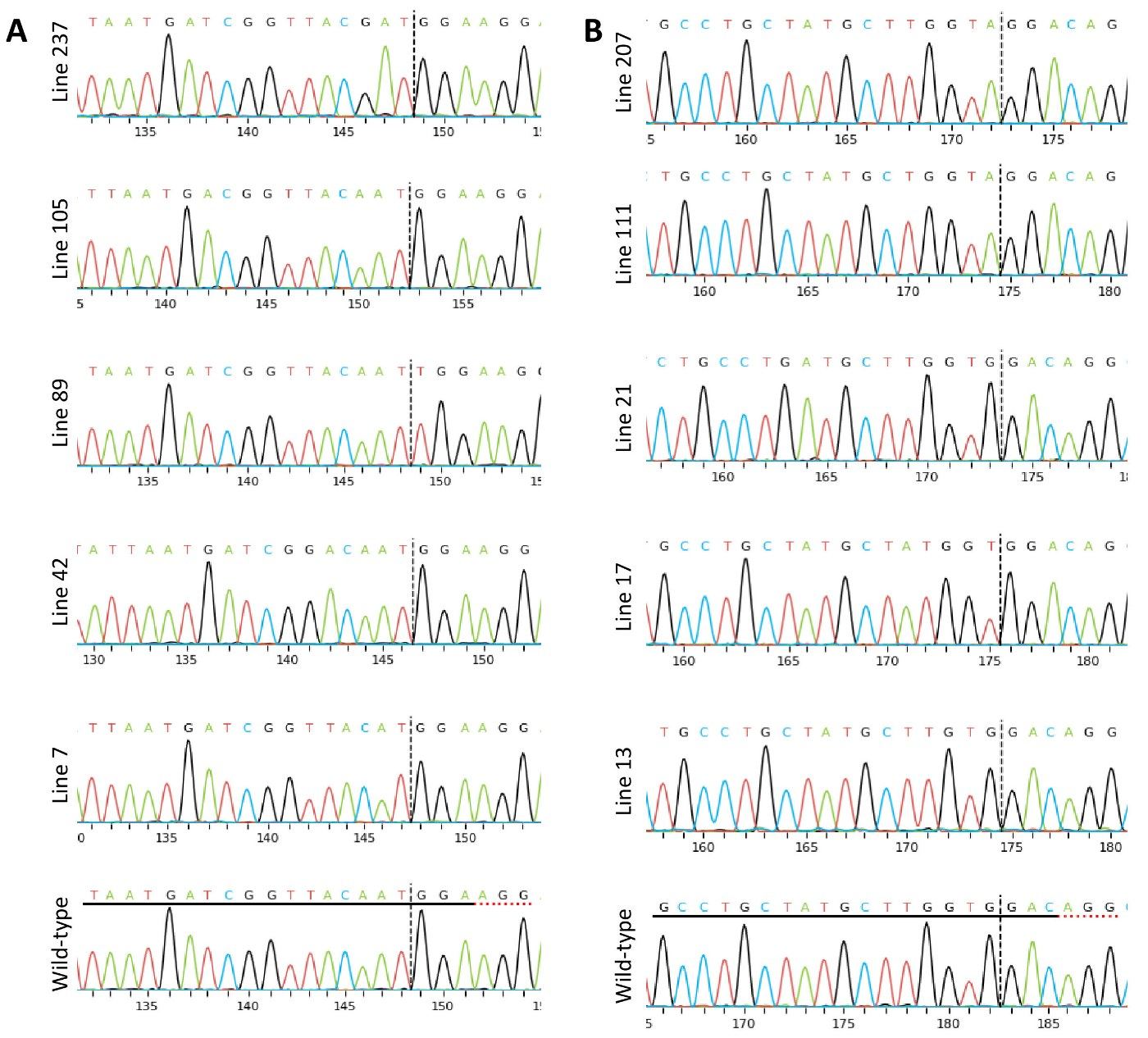
A robust and efficient CRISPR/Cas9 based genome-editing platform (SDN1) has been successfully developed and validated in chickpea, establishing an important technological foundation for precision improvement of this crop. The efficiency of the editing system was demonstrated through targeted modification of the phytoene desaturase (PDS) gene in desi chickpea cultivar JAKI9218. Molecular characterization of 10 independent shoots (30–35 days old) confirmed the generation of targeted insertion/deletion (InDel) mutations in exon 4 and exon 5, along with two dropout mutants generated using the two-component transcriptional unit (TCTU) system (Fig. 1).
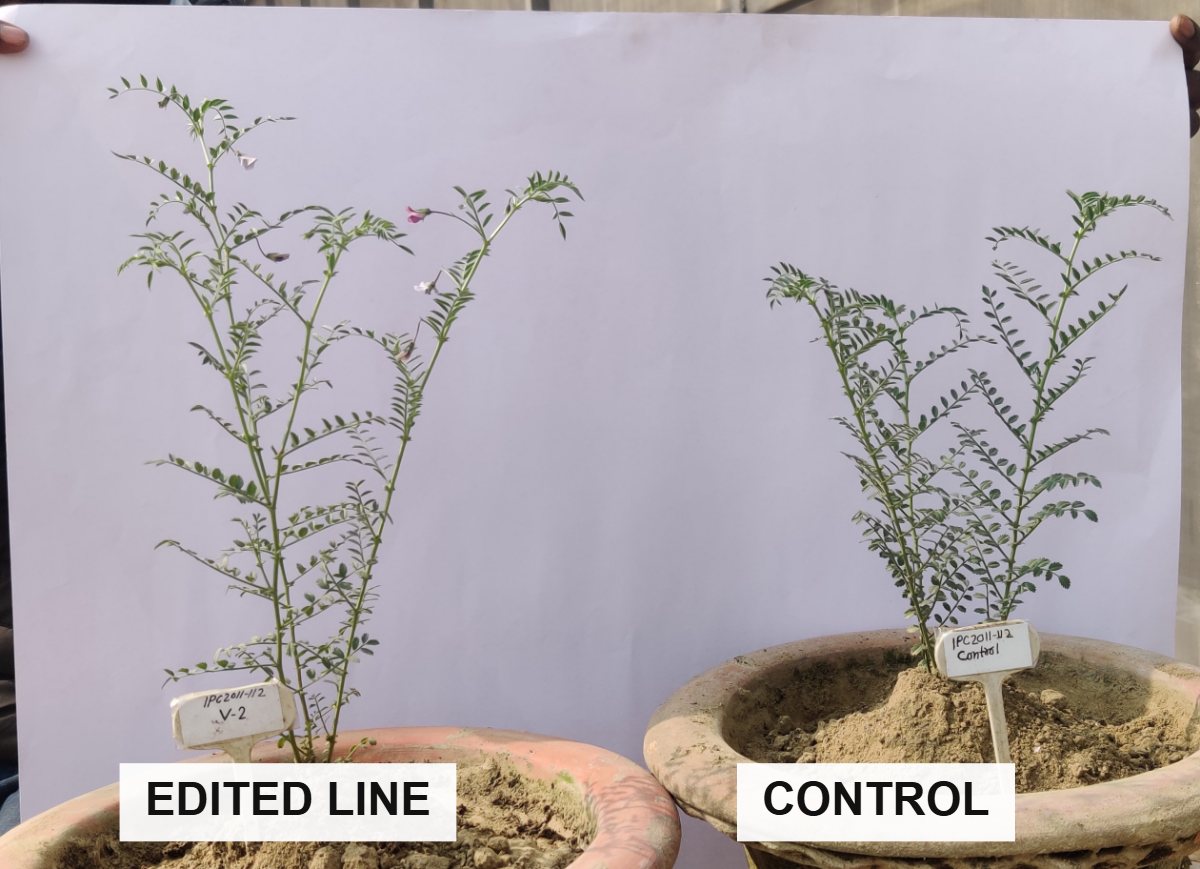
Building on this achievement, the established genome-editing platform was successfully deployed to target Early flowering locus 1 (Efl1), a key locus associated with flowering time. Targeted Efl1-edited lines were successfully developed in two long-duration desi chickpea genotypes viz. IPC2011-112 (Keshav) and GNG2171 (Meera). Notably, the edited lines exhibited flowering approximately 30–35 days earlier than their respective wild-types, demonstrating the potential of genome editing to precisely modify an important adaptive trait in chickpea (Fig. 2).
These early-flowering lines represent valuable genetic resources for developing chickpea varieties better adapted to terminal heat and drought, thereby helping to reduce reproductive-stage losses and enhance crop resilience.
- SDN1 CRISPR/Cas9 platform for chickpea
- 10 independent PDS-edited shoots characterized
- 2 long-duration genotypes edited at Efl1
- 30–35 days earlier flowering than wild-type
2Efficient grasspea regeneration and transformation system
A highly efficient and reproducible in vitro regeneration and transformation protocol has been developed for grasspea (Lathyrus sativus L.) and evaluated using GUS and RUBY reporter genes. Also, an efficient Agrobacterium rhizogenes-mediated hairy root transformation protocol has been established and transgenic hairy roots are visualized using the RUBY reporter gene. Again, key ODAP biosynthesis pathway related genes have been identified in grasspea.
- GUS and RUBY reporter genes
- A. rhizogenes hairy root transformation
- ODAP biosynthesis pathway genes identified

Across the institute
Explore Further
Division of Plant Biotechnology
Genome editing, functional genomics and molecular breeding for pulses — the Division that carries this programme.
Division of Crop Improvement
Breeding programmes and released varieties of the institute’s mandate crops.
Laboratories
The institute’s laboratory facilities and instrumentation.