
Resource-conserving production systems that raise water, nutrient and energy use efficiency
- Home
- Eco-efficient Farming in Pulses
Eco-efficient Farming in Pulses
Growing more pulses from less water, less fertiliser nitrogen and less energy — and leaving the soil better than we found it.
Thematic programme
What This Programme Covers
Pulses are the most resource-efficient source of plant protein in Indian farming. They fix their own nitrogen, thrive on residual moisture and fit into the gaps in cereal rotations. Eco-efficient Farming is the programme that turns that biological advantage into agronomy a farmer can use.
The work spans conservation agriculture, precision irrigation, nutrient and weed management, farm mechanisation and the newer generation of inputs — each measured not only by yield, but by what it costs the farmer in water, energy, chemicals and soil.
Priorities
Focus Areas
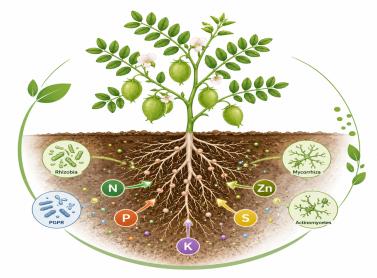
Biological nitrogen fixation and soil health improvement through pulse-based rotations
Mechanisation and precision inputs matched to smallholder field conditions
How the work is organised
Work Streams
Conservation agriculture & resource conservation technologies
Zero and reduced tillage, residue retention and permanent bed systems studied for their effect on soil structure, moisture retention and crop performance in pulse-based rotations. The long-term work on diversifying cereal-dominated systems with pulses sits at the centre of this stream.
Water use efficiency & precision irrigation
Irrigation scheduling matched to crop growth stages, micro-irrigation and moisture-conservation practices to raise output per unit of water — work that runs from the Indo-Gangetic Plain through to the hyper-arid western plain at the Regional Centre, Bikaner.
Biological nitrogen fixation & soil health
Pulses fix atmospheric nitrogen and leave the soil in better condition for the crop that follows. This stream covers rhizobial and PGPR inoculants, nutrient management that complements biological fixation, and the measurement of soil carbon and fertility gains from pulse-inclusive rotations.
Integrated weed management
Weed competition is one of the largest avoidable yield losses in pulses. Pre- and post-emergence herbicide schedules, mechanical weeding and crop-competition approaches are developed and validated for pulse-based cropping systems.
Precision farm mechanisation
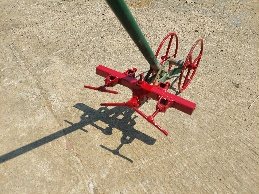
Equipment matched to smallholder field conditions — manual and power-operated weeders, herbicide applicators and precision machines, extending to AI- and IoT-based equipment under the institute’s engineering programme.
New-generation agronomy
Nano-fertilizers, bio-stimulants, agronomic biofortification and climate-resilient agronomy — the emerging input and practice set being tested for pulse crops, together with regenerative and nature-based approaches to pulse-based cropping systems.
In the field
Equipment Developed for Pulse Growers
Weeding is where mechanisation pays back fastest in pulses. The full range of institute machinery, including the threshing and milling equipment, is on the Crop Production page.
Mechanical weed control
- Manual and power-operated weeders matched to the row spacing used in pulse crops
- Mechanical weeding as an alternative to a herbicide pass, or in rotation with one to slow resistance
- An applicator that places herbicide accurately when a chemical pass is the right call
Across the institute
Where This Work Happens
Division of Crop Production
Agronomy, conservation agriculture, irrigation, weed and nutrient management, and farm mechanization.
Division of Basic Sciences
Plant physiology, biochemistry, agricultural chemistry and microbiology — including the biology behind nitrogen fixation.
Regional Centre, Bikaner
Production and protection technologies for the hyper-arid western plain, with a focus on irrigation and nutrient management.
AICRP on Rabi Pulses
Conservation agriculture and nutrient management through PGPR and biological nitrogen fixation, across 28 centres.
Research Projects
The institute-funded and externally funded projects that carry this work.
Technologies for commercialization
Machines, protocols and processes released by the institute for industry uptake.